You may own a beautiful fragrance, but where and how you apply it can influence the way you experience its scent throughout the day. Applying perfume to the right areas can help the fragrance develop naturally and create a balanced scent around you.
Getting the most from your fragrance is not simply about using more sprays. Proper application, skin condition, fragrance concentration, and even the weather can all affect performance. At Khaltate Perfumes, we explain the best places to spray perfume, common application mistakes to avoid, and simple tips that can help you enjoy your fragrance for longer.
Why Does It Matter Where You Spray Perfume?
After perfume is applied, it interacts with your skin and the surrounding temperature. Certain areas of the body are naturally warmer, which can help fragrance notes develop and diffuse gradually.
This is why pulse points are among the most popular areas for perfume application. However, where you spray is only one part of the experience. Fragrance concentration, formulation, skin type, temperature, humidity, and the amount applied can all influence longevity and projection.
What Are Pulse Points?
Pulse points are areas where blood vessels are relatively close to the surface of the skin. These areas tend to be warmer, which can help a fragrance develop and release its notes gradually.
Common pulse points include the wrists, neck, behind the ears, and inside the elbows.
1. The Sides of Your Neck
The neck is one of the most popular places to apply perfume. A light application on either side of the neck can create a noticeable fragrance presence without requiring excessive spraying.
As you move throughout the day, your fragrance can gently diffuse into the surrounding air, making the neck an excellent location for both everyday wear and special occasions.
2. Behind the Ears
The area behind the ears is another popular fragrance application point. It is relatively warm and close to the neck, helping create a subtle scent that becomes noticeable when someone is near you.
You generally don’t need a large amount of perfume in this area. A controlled application is usually enough to complement fragrance applied elsewhere.
3. The Wrists
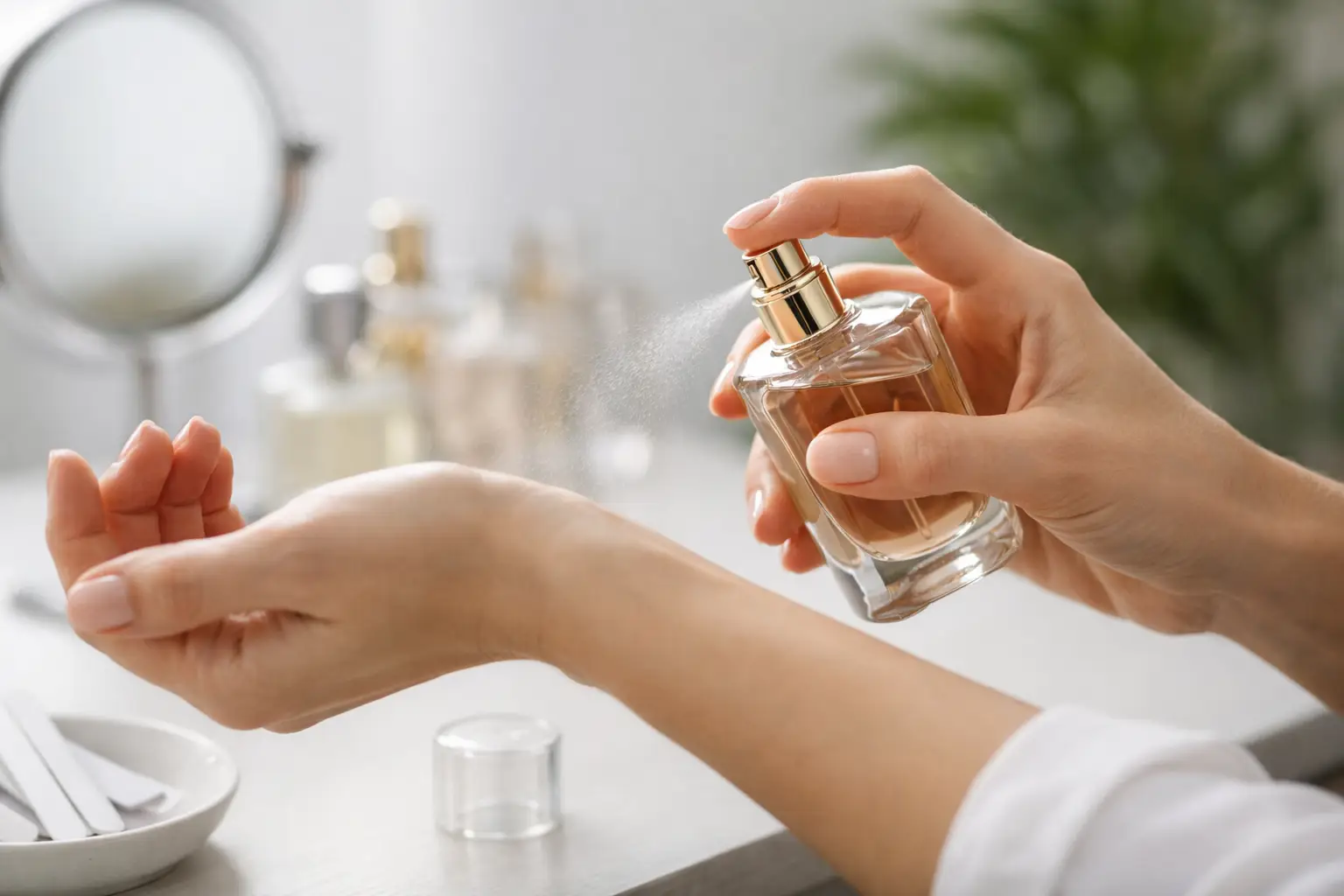
The wrists are among the best-known pulse points and are commonly used when testing or wearing perfume. You can spray one or both wrists and allow the fragrance to dry naturally.
However, there is one common perfume mistake that many people make immediately after applying fragrance to their wrists: rubbing them together.
Should You Rub Your Wrists After Applying Perfume?
It is better to let perfume dry naturally rather than vigorously rubbing your wrists together. Rubbing is unnecessary and may change the way you experience the opening and development of the fragrance on your skin.
After spraying, simply allow the perfume to settle and develop naturally.
4. The Chest
The chest can be an excellent place to apply fragrance, particularly when part of the area is covered by clothing. The scent remains relatively close to the body and can gradually become noticeable as you move.
This technique works particularly well for people who prefer a more personal fragrance experience rather than strong projection across an entire room.
5. The Back of the Neck
The back of the neck is another useful application area. As you walk and move, the fragrance can leave a subtle scent trail behind you.
Rather than concentrating many sprays in one location, consider combining a light application here with other pulse points for a more balanced fragrance experience.
6. Inside the Elbows
The inside of the elbows is a pulse point that is sometimes overlooked. It can be a useful place to apply fragrance, particularly when wearing short sleeves.
The natural movement of your arms can help diffuse the scent throughout the day. As with any fragrance application, avoid spraying onto irritated, damaged, or particularly sensitive skin.
Can You Spray Perfume on Clothes?
Fragrance can sometimes remain noticeable on fabric for longer than it does on skin, which is why some people like to add a light spray to their clothing.
However, certain perfume formulations may leave marks or stains on some materials, particularly light-colored clothing and delicate fabrics.
If you want to apply perfume to clothing, test it first on a small, hidden area and spray from a reasonable distance. Extra care should be taken with silk and other delicate materials.
Should You Spray Perfume on Your Hair?
Hair can retain fragrance, but frequently spraying traditional perfume directly onto your hair may not always be ideal, particularly when the formulation contains a high level of alcohol.
If you enjoy having fragrance in your hair, consider using a product specifically formulated for hair when available, rather than repeatedly applying traditional perfume directly to it.
Apply Perfume After Showering
One of the best times to apply fragrance is after showering and drying your skin. Clean skin provides a good foundation for your fragrance and reduces the possibility of other scents interfering with the perfume.
You can also moisturize your skin before applying fragrance, particularly if your skin tends to be dry.
Does Moisturized Skin Help Perfume Last Longer?
Fragrance can often remain noticeable for longer on moisturized skin compared with very dry skin. Applying an unscented moisturizer before your perfume can therefore be a useful part of your fragrance routine.
An unscented product is usually a good option because it will not compete with the fragrance. Alternatively, you can use a body product with a complementary scent as part of a fragrance-layering routine.
Don’t Apply Too Much Perfume in One Place
Using more perfume does not automatically create better longevity or a more attractive scent experience. Excessive application can make a fragrance overwhelming for both you and the people around you.
Instead of applying many sprays to one area, distribute an appropriate amount across selected pulse points such as the neck, wrists, or chest.
This can create a more balanced scent profile while allowing the fragrance to surround you naturally.
How Many Sprays of Perfume Should You Use?
There is no universal number of sprays that works for every fragrance. Some perfumes are highly concentrated and powerful, requiring only a small amount, while lighter fragrances may be comfortable with additional sprays.
The environment matters as well. The amount that works well outdoors during an evening event may be excessive in a small office or meeting room.
Start with a moderate amount and learn how your fragrance performs before deciding whether you need more.
Is It Normal to Reapply Perfume During the Day?
Yes. If you wear a lighter fragrance or need it to last through a long day, reapplication can be perfectly normal.
This does not necessarily mean the perfume performs poorly. Longevity varies depending on concentration, composition, skin, climate, and application.
It is also important to remember that your nose can become accustomed to a fragrance after you have worn it for several hours. You may stop noticing your perfume even while other people can still smell it.
Should You Spray Perfume into the Air and Walk Through It?
Spraying perfume into the air and walking through the mist is a popular technique, but much of the fragrance may never reach your skin or clothing.
If you want more controlled application and less wasted product, spray your perfume directly onto selected areas from an appropriate distance.
Where Should You Spray Perfume in Hot Weather?
In warm climates such as the UAE and other Gulf countries, heat can cause fragrances to diffuse more quickly. As a result, you may not need as much perfume as you would in cooler conditions.
Consider using controlled sprays on the neck, chest, or selected pulse points, particularly when wearing powerful compositions featuring Oud, amber, spices, or deep woods.
Lighter citrus, fresh, and aromatic fragrances may require reapplication during the day depending on their formulation and performance.
Where Should You Spray Perfume for Special Occasions?
For evening events and special occasions, consider applying fragrance to the sides of the neck, behind the ears, and chest. You can also add a light spray to suitable clothing if the perfume formulation and fabric allow it.
The goal is to create an elegant fragrance presence that becomes noticeable naturally rather than overwhelming the people around you.
Where Should You Spray Perfume for Work?
Moderation is particularly important in offices, meetings, and other enclosed environments. A few carefully selected application points, such as the neck and wrist, may be enough to create a refined scent that stays relatively close to you.
An ideal office fragrance should complement your presence rather than dominate the room.
Simple Tips to Help Your Perfume Last Longer
- Apply fragrance to clean skin.
- Moisturize dry skin before applying perfume.
- Focus on pulse points such as the neck and wrists.
- Allow perfume to dry naturally without rubbing your wrists.
- Avoid excessive spraying.
- Be careful when applying perfume to clothing.
- Store your perfume away from direct sunlight and excessive heat.
- Adjust the number of sprays according to fragrance strength, climate, and occasion.
Discover Your Fragrance with Khaltate Perfumes
How you apply your perfume is an important part of the fragrance experience, but choosing a composition that matches your personality and lifestyle is where the journey begins.
At Khaltate Perfumes, we offer a diverse selection of fragrances featuring oriental, woody, floral, fresh, and sophisticated notes for different preferences and occasions.
Whether you’re searching for an elegant everyday scent, a deep fragrance for special occasions, or a distinctive composition to become your signature scent, applying it correctly can help you enjoy every stage of the fragrance from the opening notes to the final dry-down.
Conclusion
If you’re wondering where to spray perfume to make it last longer, start with pulse points such as the sides of your neck, wrists, and behind your ears. The chest, back of the neck, and inside the elbows can also be useful application areas depending on your preference.
Remember, however, that longevity is not determined by application location alone. Fragrance concentration, composition, skin type, climate, and application technique all play a role. Use your perfume in moderation, allow it to develop naturally, and enjoy every part of your fragrance experience with Khaltate Perfumes.